


When floodwaters rise, standard industrial infrastructure faces an existential threat. In the wake of historic coastal storms and flash flooding events, post-disaster assessments compiled by the Federal Emergency Management Agency (FEMA) revealed a stark reality: a massive number of emergency standby systems failed to start or run satisfactorily due to inadequate protection against wind, flying debris, and high water.
At SLAYSON®, we engineer and manufacture FEMA-compliant electrical enclosures and submersible enclosures for flood mitigation designed to withstand prolonged inundation, extreme hydrostatic pressure, and the harshest industrial environments. We provide the ruggedized protection required to keep critical controls, switchgear, and pump systems operating continuously when municipal and industrial infrastructure is tested to its absolute limit.
The Engineering Reality: Why Splashing Protection Fails in a Flood
A common point of failure in flood-prone installations is the misspecification of environmental protection ratings. Many engineers rely on NEMA 4 or NEMA 4X enclosures. While these enclosures provide excellent protection against windblown dust, rain, splashing water, and high-pressure hose-directed washdowns, they are intrinsically unrated for submergence.
When a facility is inundated, or an installation falls below the Design Flood Elevation (DFE), a standard enclosure will succumb to hydrostatic pressure, causing immediate water ingress and catastrophic system short circuits.
To organize this data clearly for design selection, we compare the key performance criteria below:
| Environmental Risk Factors | Splash & Washdown Protection (NEMA 4 / NEMA 4X / IP66) | True Flood & Submersion Protection (NEMA 6P / IP68) |
| Dust & Ingress Resistance | Complete protection against dust ingress. | Complete protection against dust ingress and particulate tracking. |
| Water Jet Exposure | Formulated to resist powerful water jets and high-pressure cleaning. | Engineered to withstand heavy spray, high-velocity currents, and extreme washdowns. |
| Submersion Resilience | Fail points occur. Not rated for static head pressure or water accumulation. | Full compliance. Rated for continuous static submergence at defined engineering depths. |
| Hydrostatic & Hydrodynamic Loads | Deflection or seal failure occurs under external floodwater loading. | Engineered to absorb hydrostatic pressure, wave action, and structural debris impacts. |
| Typical Field Application | Heavy industrial washdown facilities and sheltered outdoor installations. | Below-grade pits, coastal infrastructure, and high-risk flood mitigation zones. |
To counter these vulnerabilities, we design our systems to meet the strict parameters of NEMA 6P / IP68 flood protection. By transitioning from splash-resistant designs to true submersible engineering, we help you eliminate the risk of extended post-flood delays, facility contamination, and expensive equipment change-outs.
Meeting FEMA Siting and Structural Mandates
FEMA mitigation guidelines and building codes specify that all electrical systems, mechanical units, and service equipment must be securely anchored and elevated to or above the DFE. However, architectural and geographical realities often dictate that secondary systems, such as float switches, emergency load panels, and pump connections, must be positioned below the flood line.
When structural modifications or high-elevation pedestals are impractical, ASCE 24 and local ordinances allow electrical components below the DFE only if they are explicitly designed to resist hydrostatic and hydrodynamic loads, stresses from wave action, and the severe physical effects of buoyancy.
Our engineering team manufactures FEMA-compliant electrical enclosures that satisfy these exact regulatory frameworks:
- Hydrostatic and Hydrodynamic Resilience: Heavy-gauge construction prevents wall deflection under deep water pressures.
- Corrosion Resistance: For installations within coastal hazard zones, we utilize non-ferrous metals and premium marine-grade materials to defend against aggressive saltwater environments.
- Buoyancy Mitigation: Integrated heavy-duty mounting flanges allow secure anchoring to concrete platforms, ensuring the enclosure remains fixed despite buoyant soil or water uplift forces.
The SLAYSON® Core Advantage: Factory-Integrated Accessories
A submersible enclosure is only as reliable as its weakest penetration. Modifications made in the field by third-party contractors frequently compromise the structural seal, invalidating NEMA 6P ratings and introducing clear failure points.
What sets us apart from traditional fabricators is our ability to deliver a modified, turnkey system directly from our factory floor. We eliminate compliance risks by pre-engineering, installing, and certifying a vast ecosystem of custom accessories:
| Factory-Integrated Modification | Structural & Submersible Engineering | Field Mitigation Benefit |
| Welded Hubs & Couplings | Factory-welded, smooth-ground entries forming an isotropic bond with the enclosure chassis. | Eliminates third-party compression gland failures; guarantees NEMA 6P / IP68 underwater integrity. |
| Advanced Thermal Management | Factory-fitted closed-loop A/C or calculated heat-exchanger paths isolated from external water. | Dissipates internal heat loads without exposing sensitive internal wiring to floodwaters. |
| Internal Dead-Front/Internal Swing-Out Panels | Secondary internal barriers isolating high-voltage distributions and secondary components. | Protects operators during maintenance and optimizes layout for below-DFE installations. |
| Optical Window Lid/Door | High-impact, pressure-rated polycarbonate or tempered glass viewing ports chemically bonded and dual-gasketed to the submersible frame. | Enables seamless visual diagnostics, meter reading, and component status checks below the DFE without breaching the certified NEMA 6P / IP68 pressure seal. |
This factory-integrated approach creates a direct bridge over conflicting code requirements. For instance, while floodplain regulations demand elevation, the National Electrical Code (NEC) dictates that garage receptacles be mounted no higher than 5-1/2 feet and switches no higher than 6 feet 7 inches.
By utilizing a fully integrated, certified submersible solution with conduit rather than loose cable, you can safely place vital secondary infrastructure below the flood line in complete compliance with local ordinances.
Tailored Solutions Across Critical Sectors
We adapt our manufacturing velocity and engineering precision to meet the explicit demands of your specific workspace.
Municipal Utilities & Contractors
For utility companies and field contractors bidding on municipal projects, compliance and deployment speed are everything. If you are integrating a flood pump electric box enclosure or an industrial flood pump electrical box enclosure, you need immediate access to compliant hardware to secure your contract or resolve a water ingress issue on-site. We support your fast-tracked timelines with lightning-fast response times to inquiries and comprehensive structural documentation.
Explore how we support large-scale public utility designs.
OEM Manufacturers
OEM partners choose SLAYSON® to co-develop highly specialized enclosures built into proprietary, high-performance systems. Our team works hand in hand with your design engineers to balance space, weight, and layout constraints while meeting strict operational standards for environmental combat. We provide the iterative testing and rigorous quality control required before your product moves into high-volume production runs.
See how our engineering adapts to advanced system integrations.
Flood Mitigation Enclosure Engineering Support
Don't let environmental exposure or regulatory non-compliance threaten your critical systems. Contact our application engineers today to discuss your design parameters, obtain CAD documentation, or receive a rapid, comprehensive quote.
Start your inquiry to secure your infrastructure with the ultimate standard in submersible engineering.
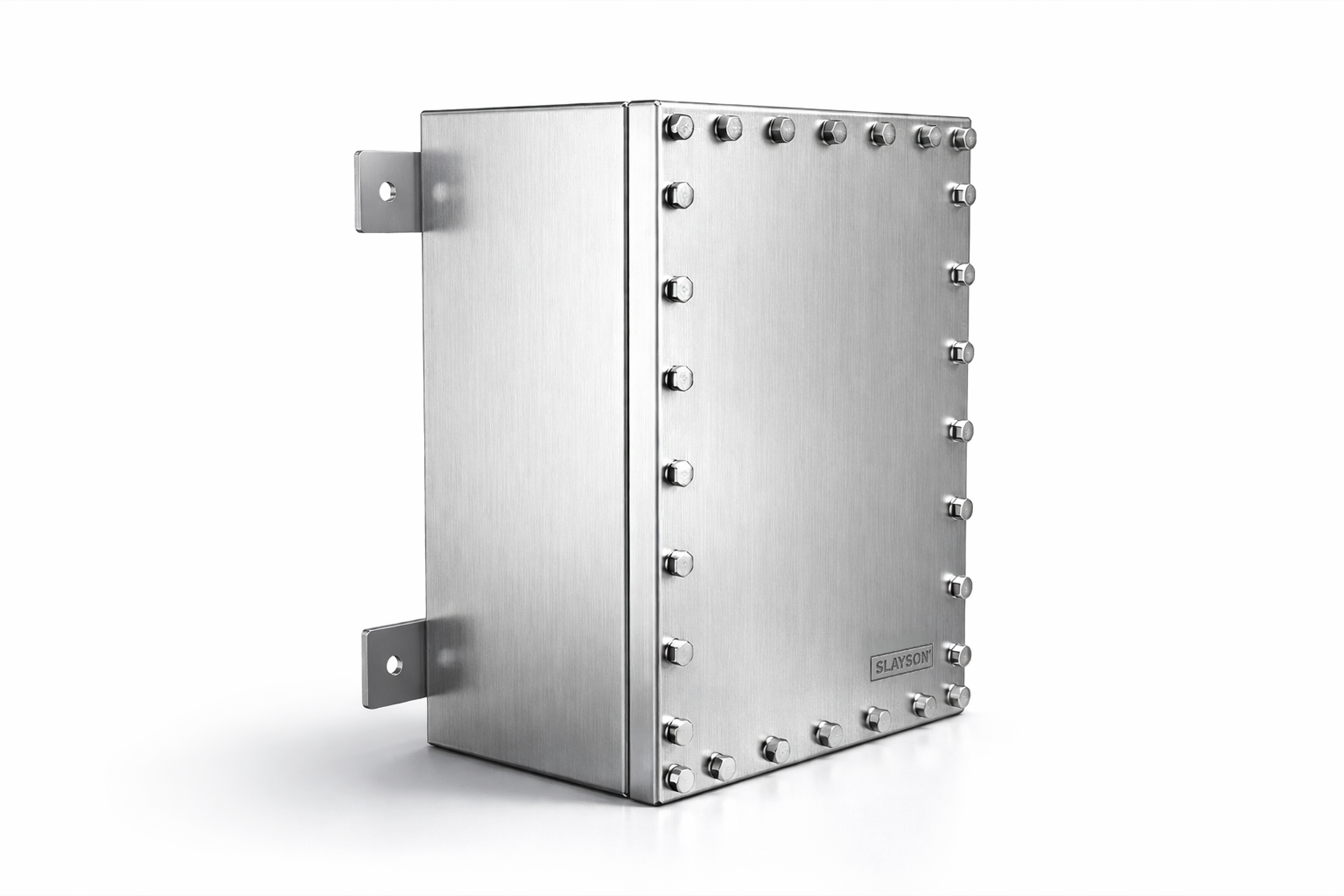

Standard Submersible Enclosure
Series:
ASMI
Submersion Depth:
15ft, 5m
Size Range:
24"x 24" to 36"x 36"


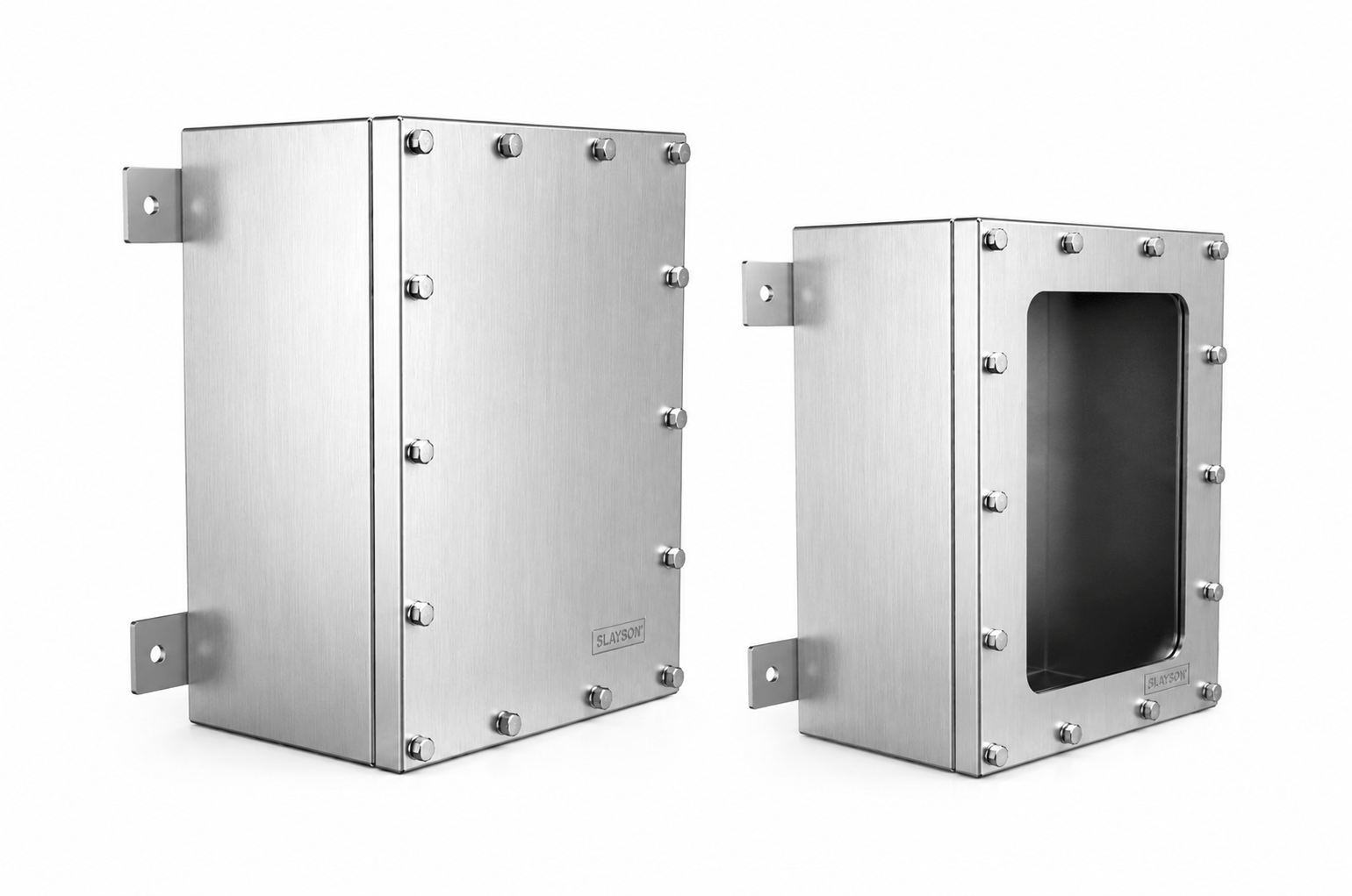
Compact Waterproof Enclosure
Series:
GSMI
Submersion Depth:
5ft, 1.5m - 24 Hrs
Size Range:
12"x 10" to 22"x 22"
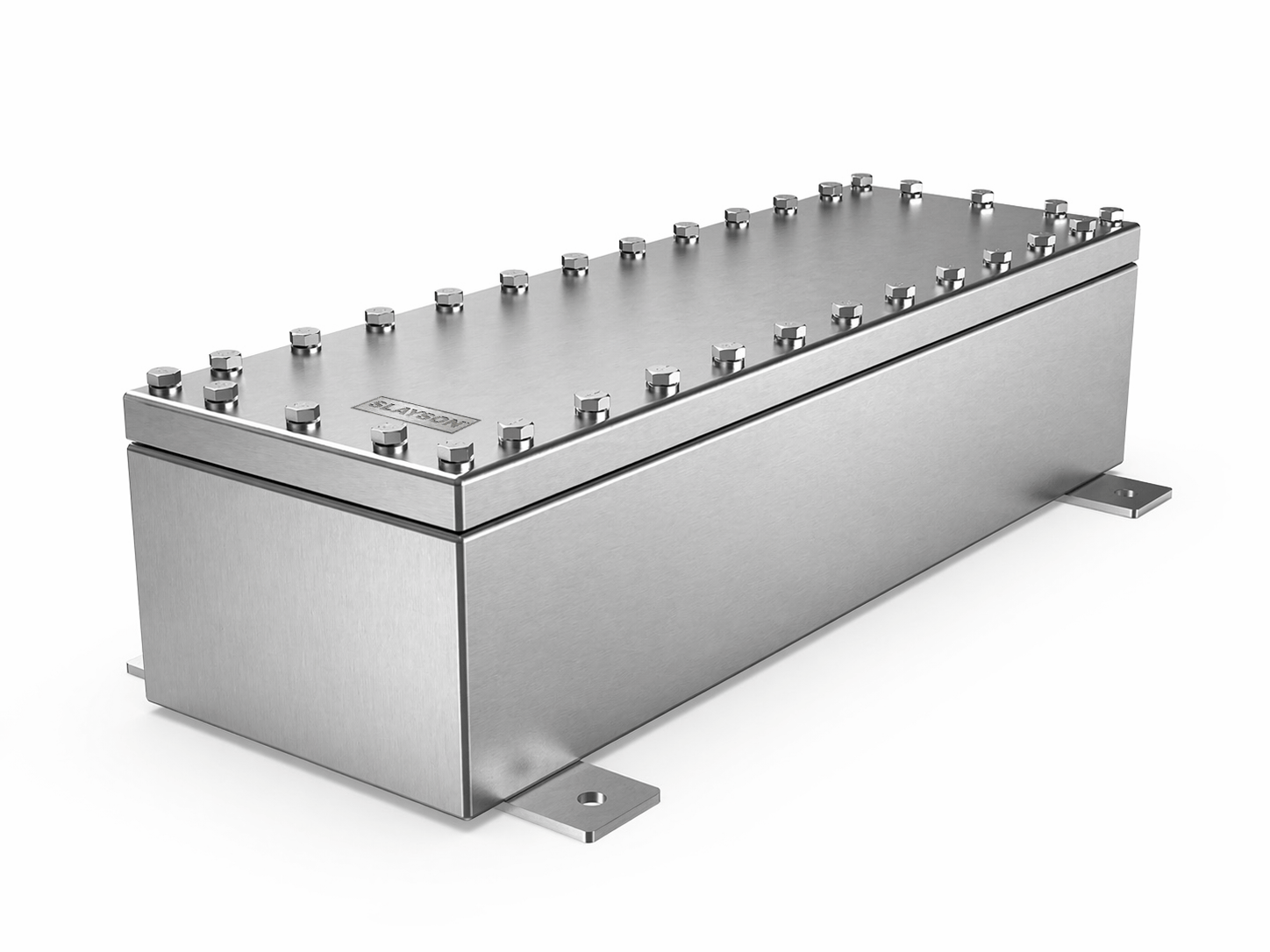
Submersible Pull Box
Series:
LSMI
Submersion Depth:
15ft, 5m
Size Range:
12"x 4" to 24"x 10"
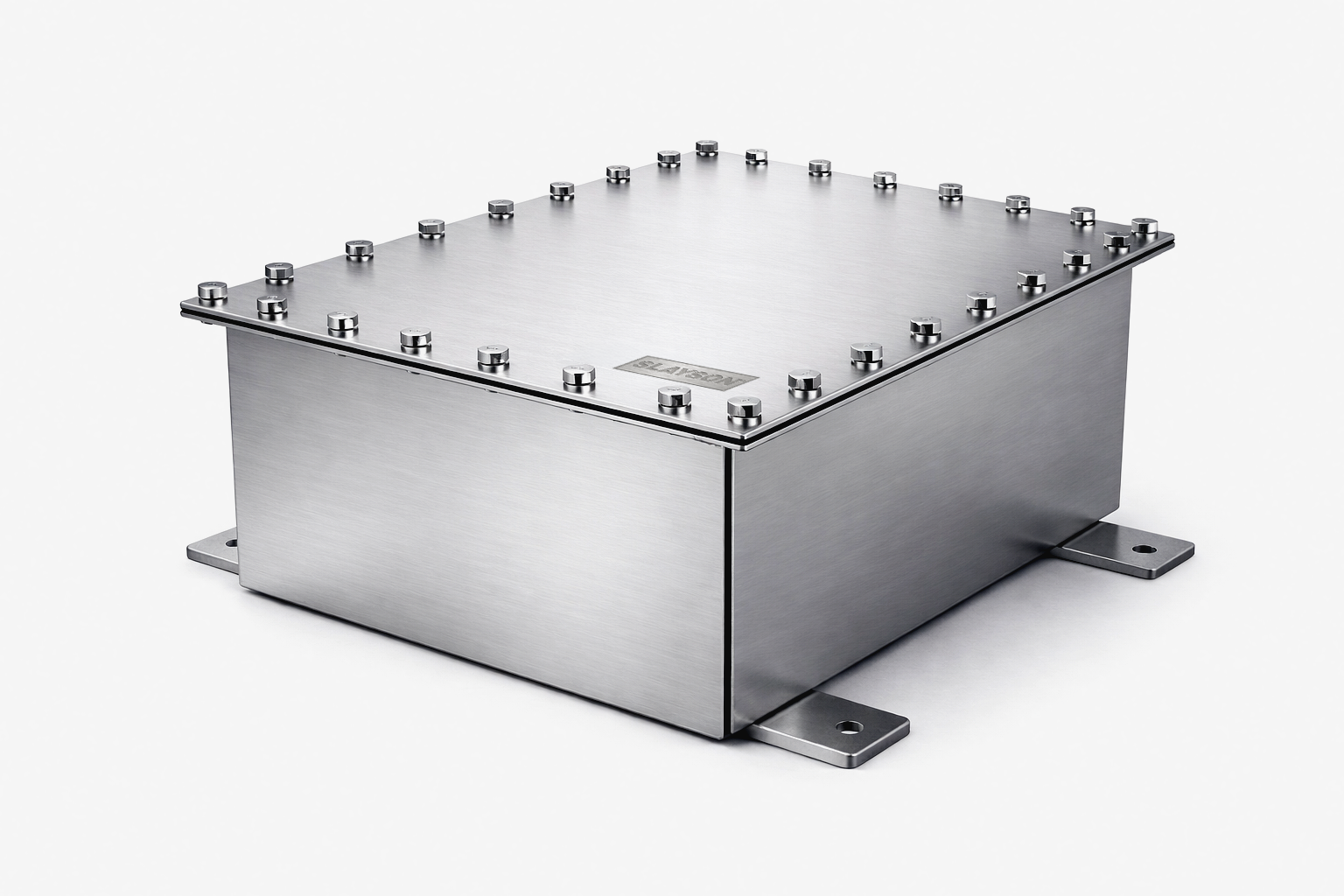
Submersible Junction Box
Series:
JSMI
Submersion Depth:
15ft, 5m
Size Range:
10"x 8" to 18"x 18"
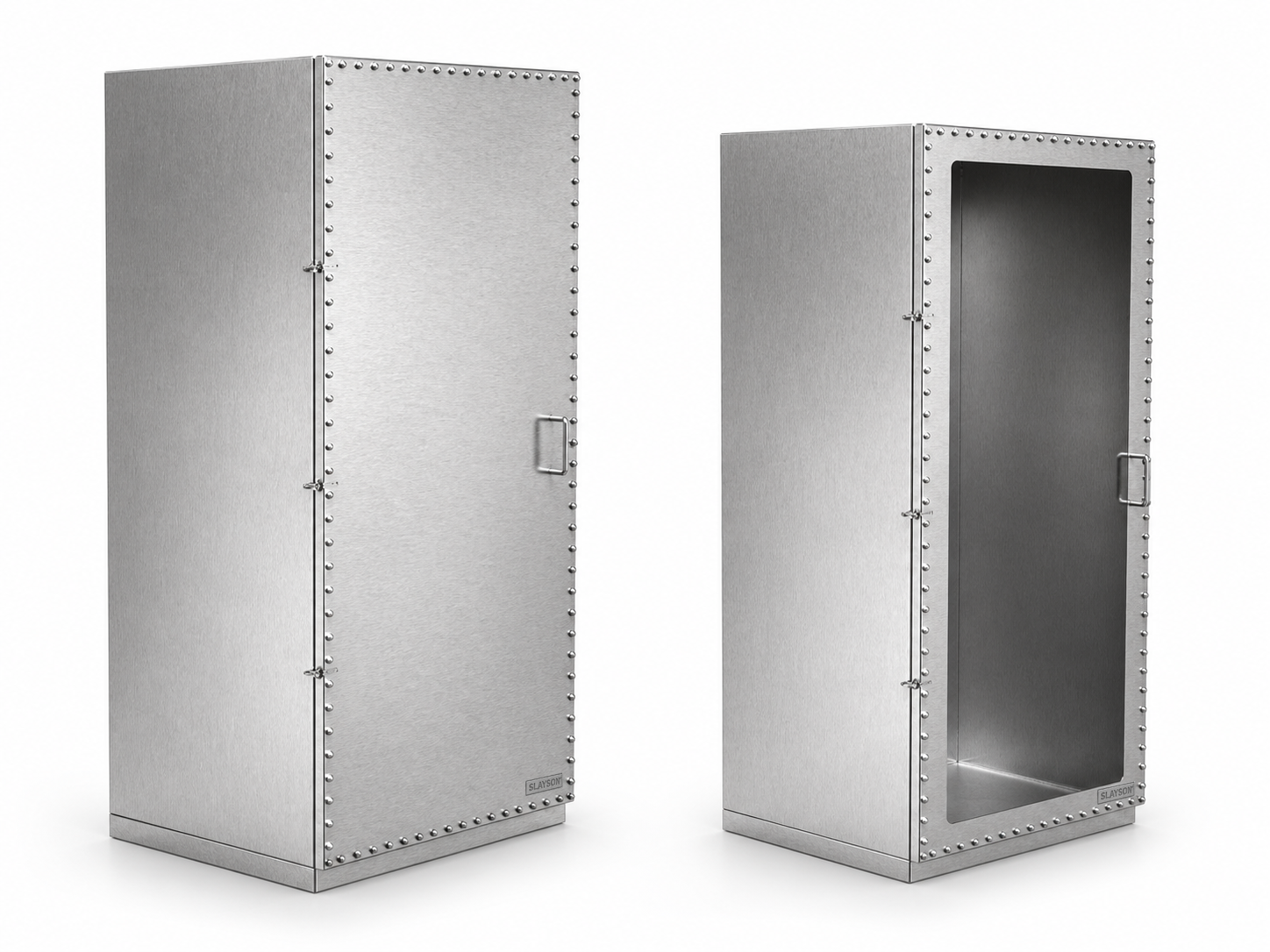
Freestand Submersible Enclosure
Series:
CSMI
Submersion Depth:
15ft, 5m
Size Range:
36"x 24" to 72"x 24"
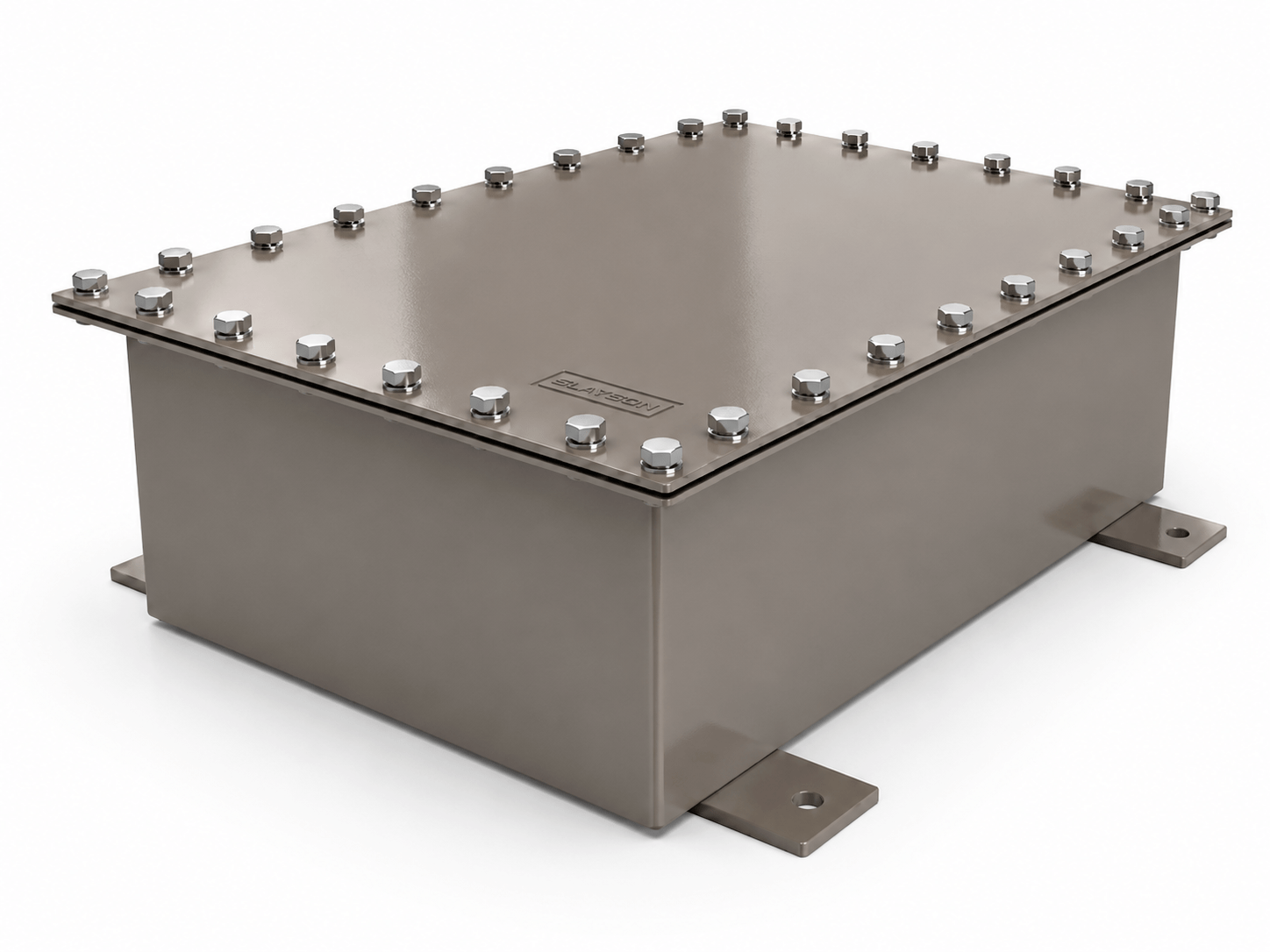

Submersible Junction Box
Series:
JAGI
Submersion Depth:
15ft, 5m
Size Range:
10"x 8" to 18"x 18"




Frequently Asked Questions
The enclosure should be selected based on factors including expected water depth, duration of submersion, material and corrosion requirements, equipment dimensions, impact exposure, and installation environment. SLAYSON’s engineering team can help identify an appropriate enclosure configuration for your application.
Yes. SLAYSON can modify standard enclosure platforms or engineer custom solutions to accommodate existing equipment, site constraints, mounting requirements, cable entries, and other project-specific needs.
Yes. Submersible enclosures can be used in coastal and low-lying infrastructure where storm surge, flooding, and rising water levels create a risk of water exposure to electrical systems.
The appropriate rating depends on the expected depth and duration of water exposure. NEMA 6 and IP67 enclosures are designed for temporary submersion, while NEMA 6P and IP68 solutions are appropriate for applications requiring prolonged or deeper submersion.
Flood mitigation enclosures can protect electrical controls, instrumentation, monitoring systems, junctions, communications equipment, and other critical hardware installed in flood-prone infrastructure.



